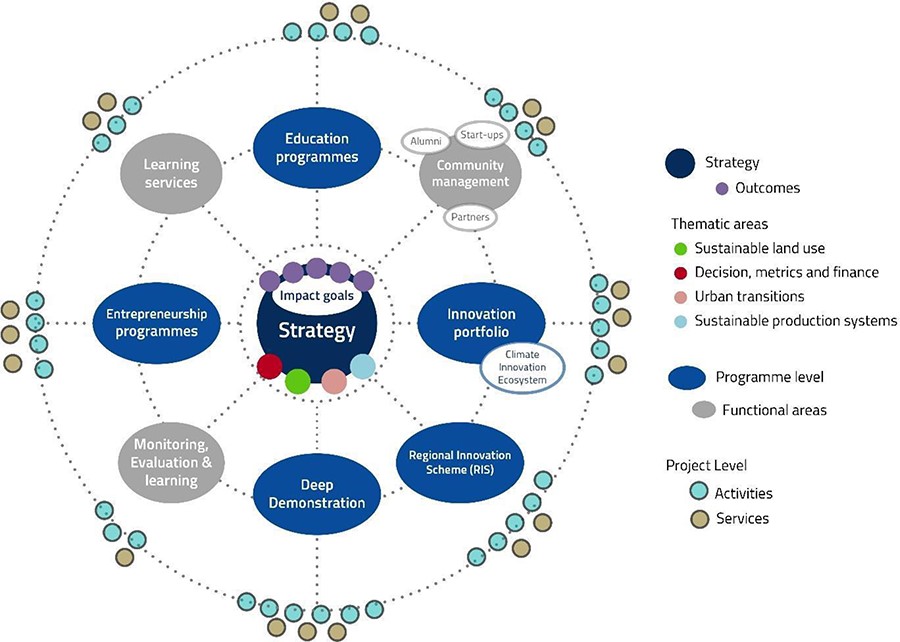
This study provides evidence on the application of a regional policy model through a portfolio of actions to support entrepreneurship and development of professional competences. For doing so, we analyse the capacity building process delivered through the EIT RIS Climate-KIC programme in the context of peripheral European regions. In the context of the EIT RIS those are defined as the ones showing innovation performance below the EU average according to the European Innovation Scoreboard.
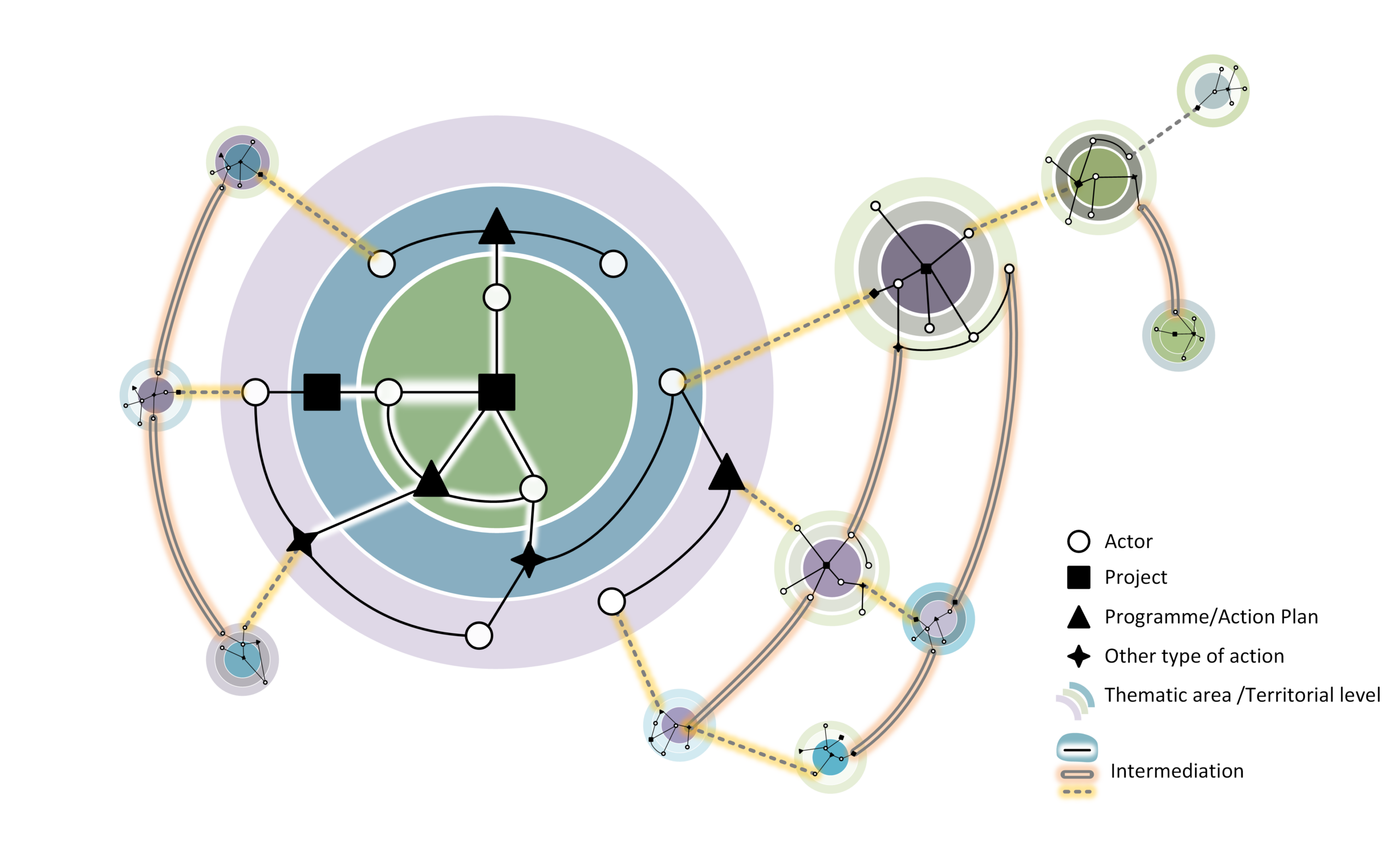
Emphasis is put on the alignment of multiple stakeholders with existing regional innovation plans such as Smart Specialisation Strategies (S3) by which policy mixes emerge with the purpose of reinforcing synergies and complementarities between EU, national, regional innovation initiatives while developing and activating large-scale “green” projects. The study addresses then the performance of the peripheral regions to improve the knowledge triangle integration. We argue that a variety of mechanisms for public-private collaboration is required to effectively support technological as well as practice-base innovation.
The case of European peripheral regions is a concrete example of the application of policy mixes by considering a variety of regional settings in terms of industrial history and governance configurations. The empirical study is based on the comparative analysis of the results of a portfolio of activities as well complementary interviews to regional policy officers. Results show that the successful alignment between regional priorities and low-carbon economy projects can be explained by how clear is the understanding of horizontal relations between stakeholders to define the long term direction of regional innovation.
Results has been already presented in the following conferences
- RSA Annual Conference 2017 “the Great Regional Awakening: New Directions“, 4th-7thJune 2017 ,Dublin, Ireland
- 12th CONFERENCE REGIONAL INNOVATION POLICIES (RIP 2017), 26-27 October 2017, Santiago de Compostela, Spain
- European Week of Region and Cities – Master Class 2017
Research Team: Cristian Matti, Julia Panny, Irene Vivas Lalinde and Balnca Juan Agulló